Career Pathways banner 1
Career Pathways banner 2
Career Pathways banner 3
Career Pathways banner 4
Career Pathways banner 5

The Shift Underway

Tech Hiring Trends Are Reshaping the Future of Work

The path from high school to a career is changing. Today, students have more than one credible route forward — and the data shows why.

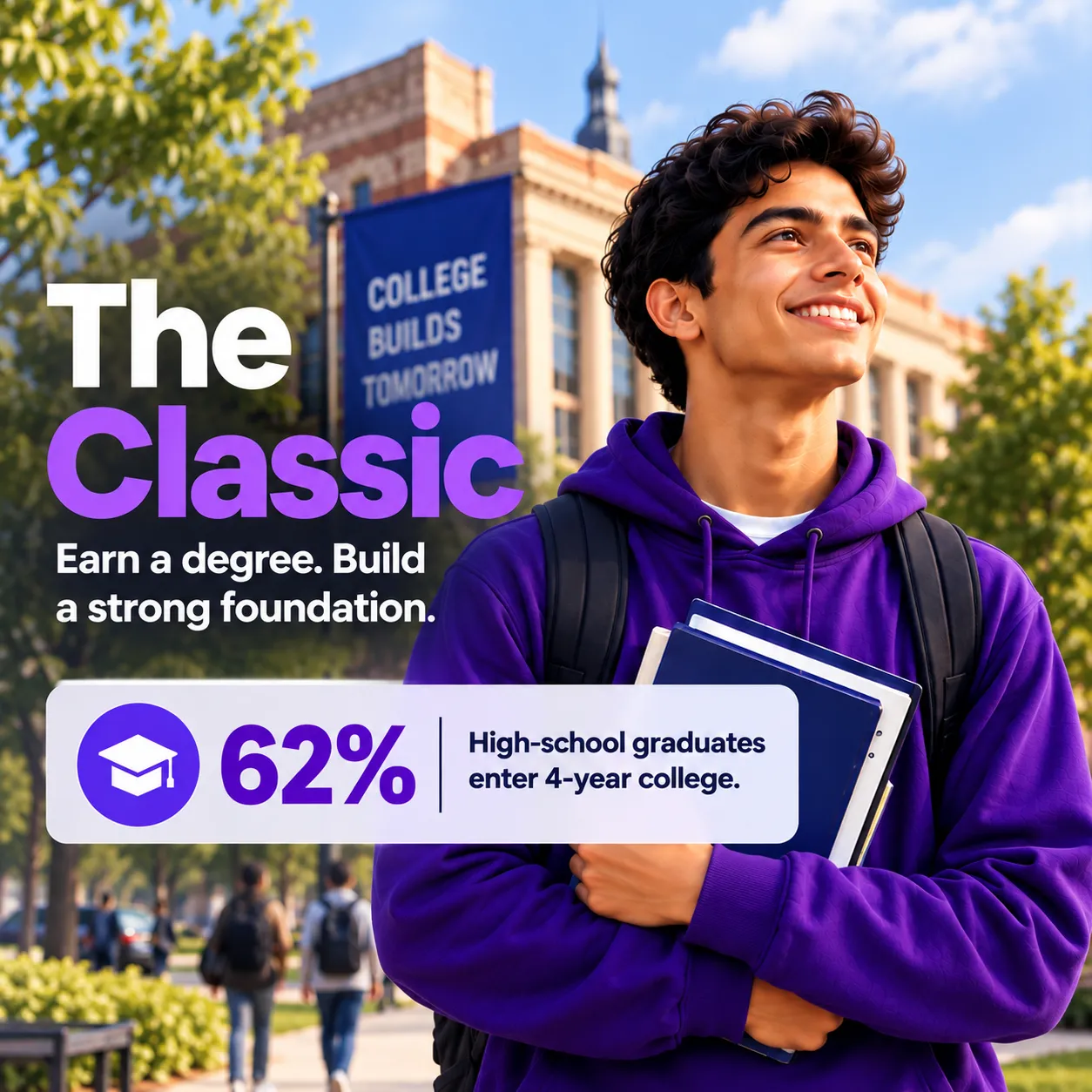
62%

High-school graduates enter 4-year college

85% of admissions prioritize STEM portfolios

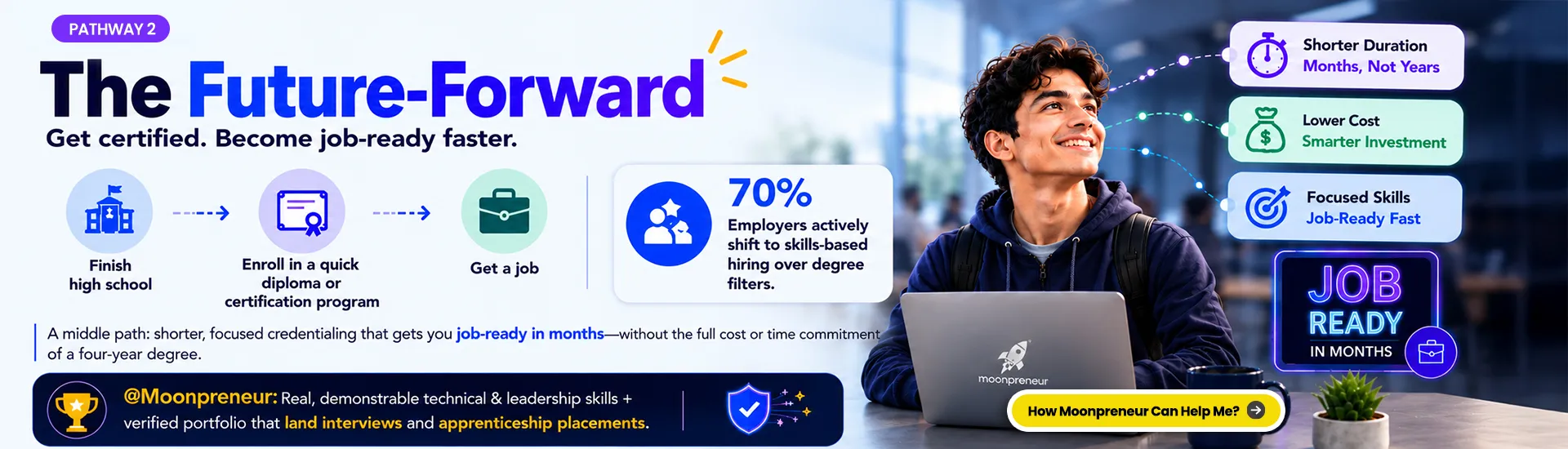
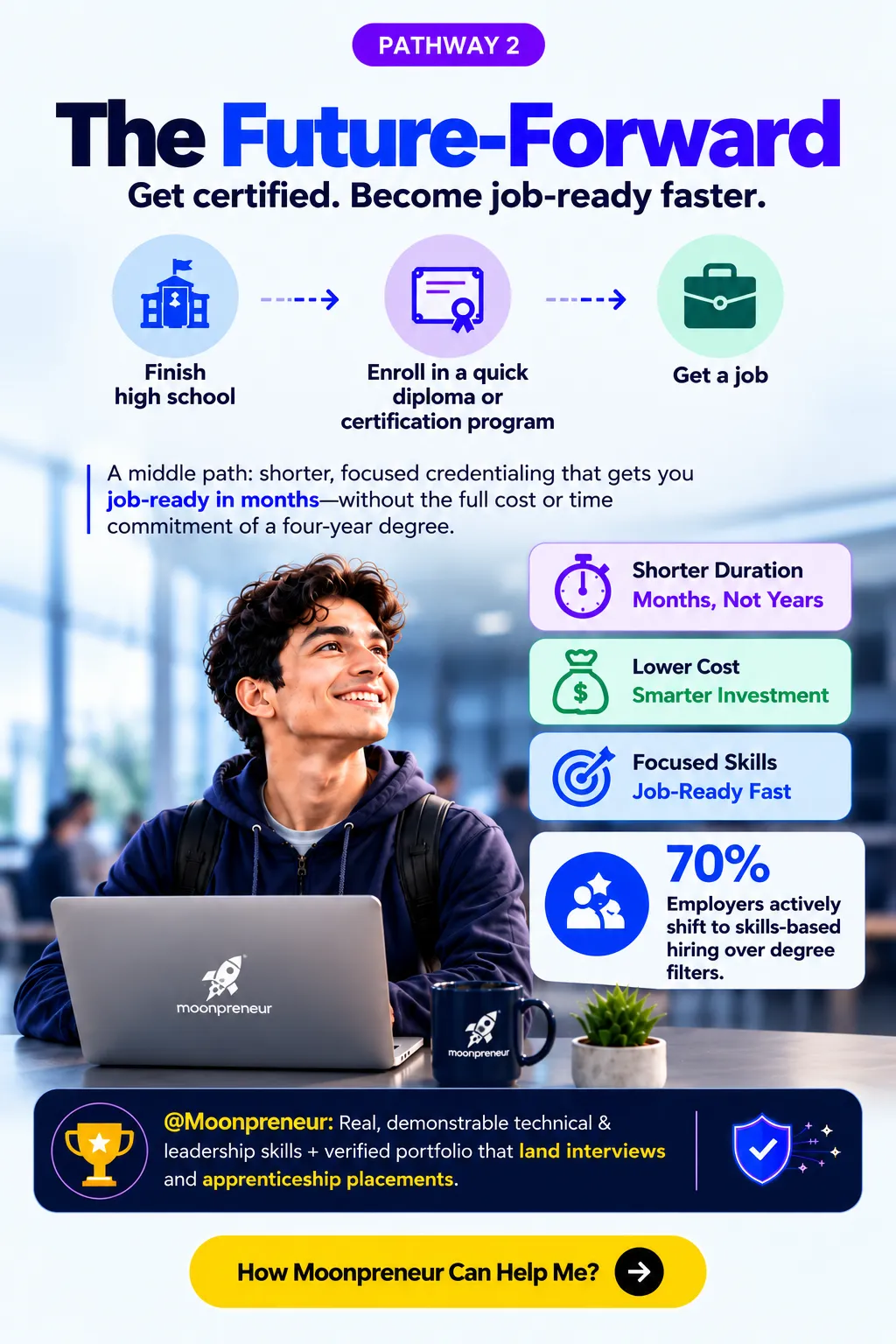
70%

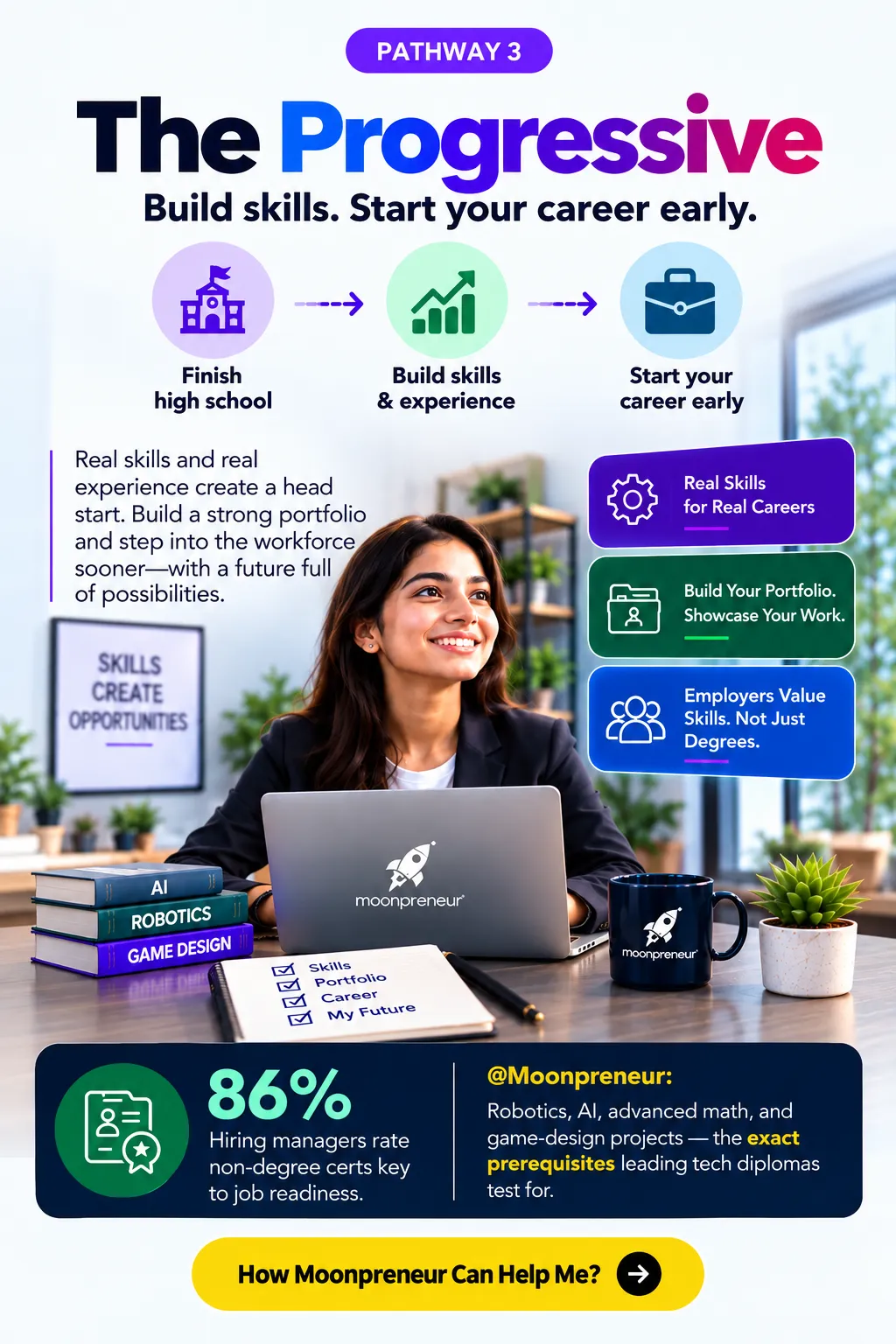
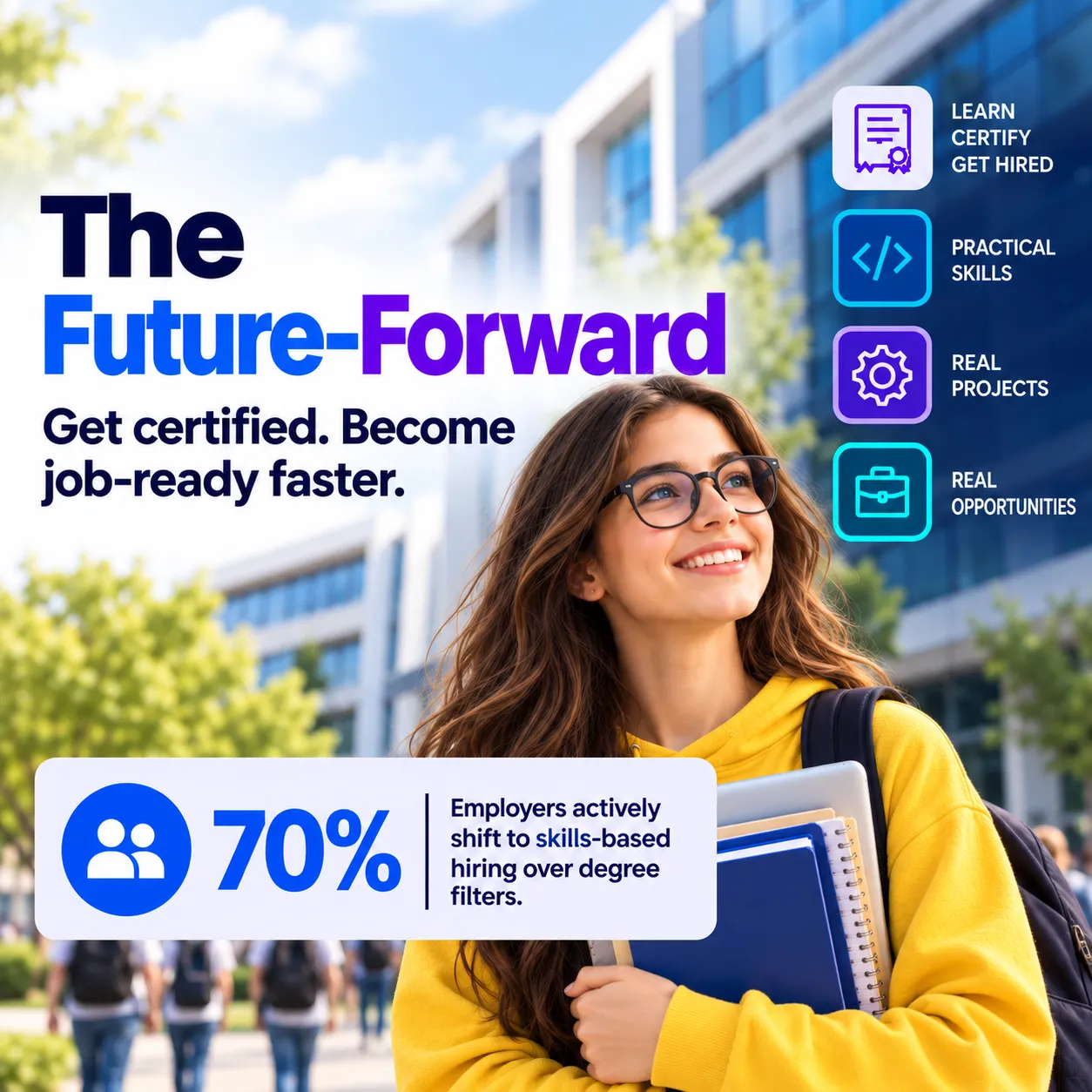
Employers shift to skills-based hiring

Skills over degree filters

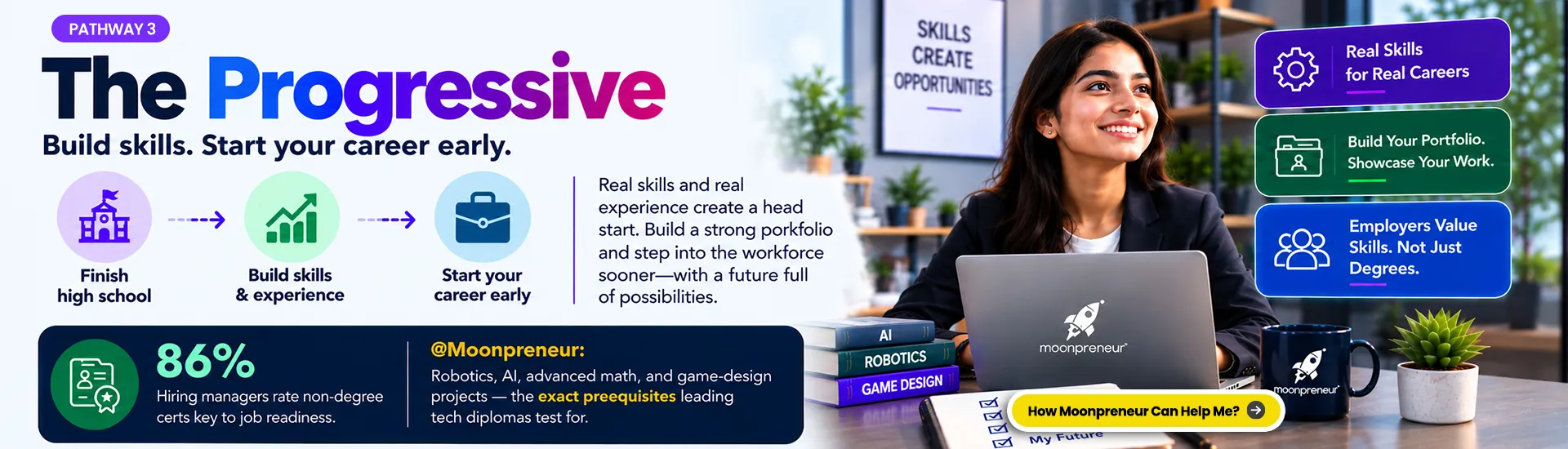
86%

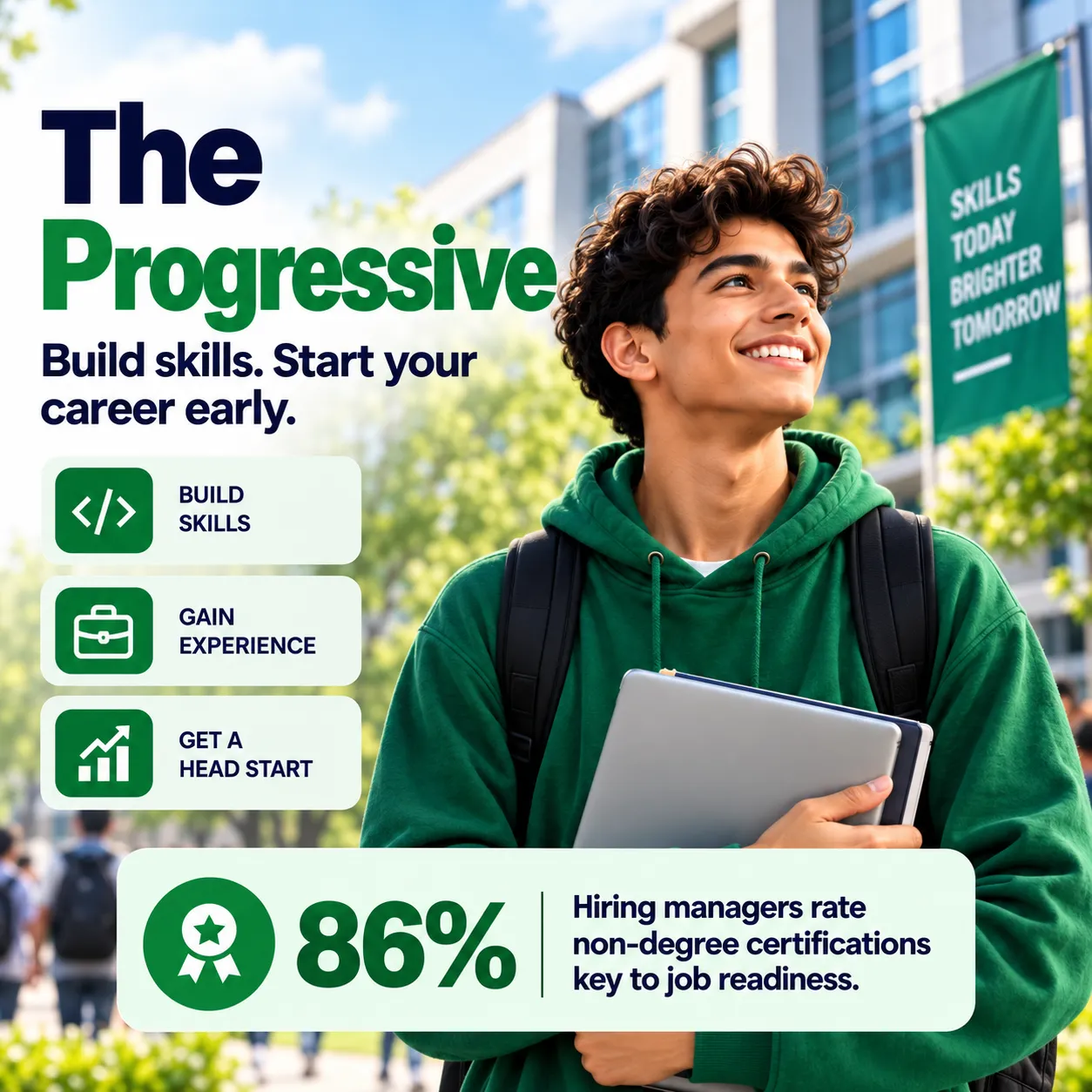
Hiring managers value non-degree certifications

Key to job readiness

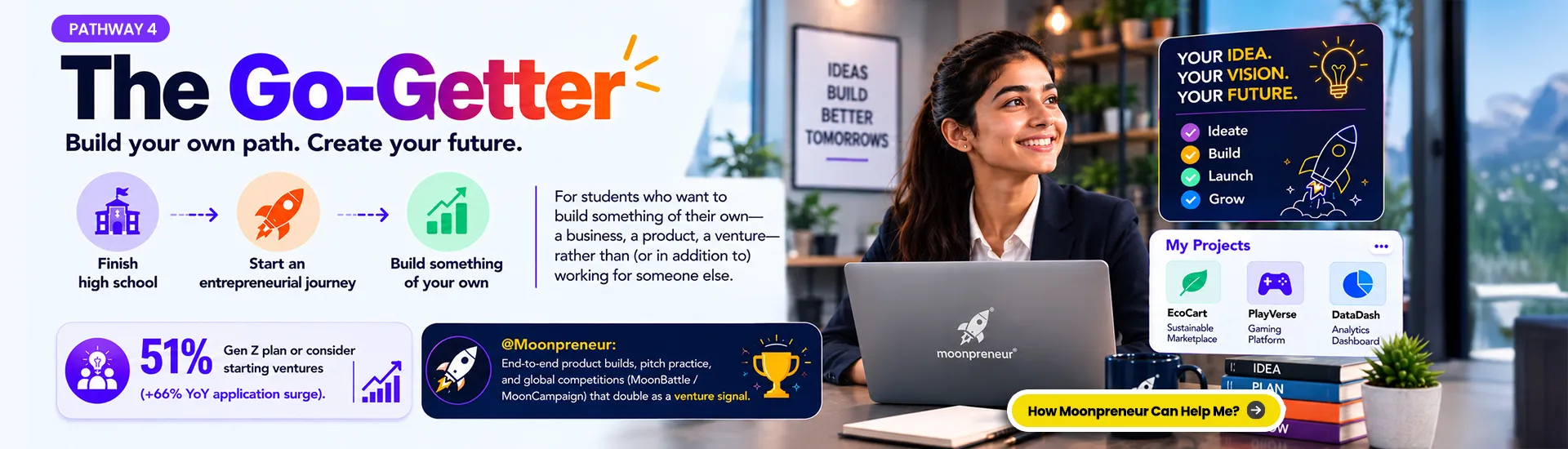
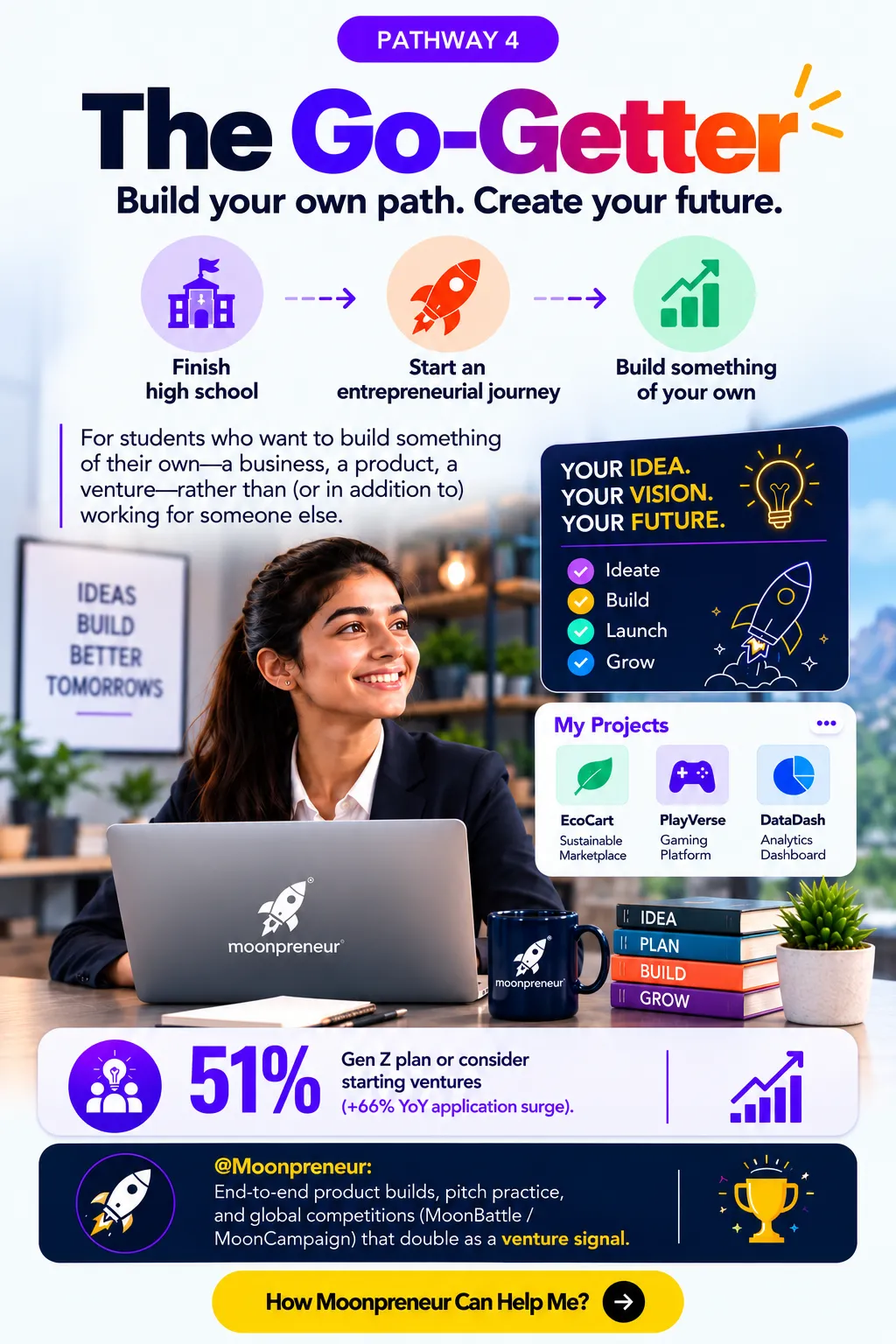
51%

Gen Z plan or consider starting ventures

+66% YoY application surge

What it means: College. Certifications. Skills-first careers. Entrepreneurship. The future of work is opening multiple legitimate pathways — and students who build real skills early are better positioned for whichever path they choose.

Tech Hiring Trends: This Isn't Speculation. It's Already Happening.

The 10-Year Workforce Forecast

The Future of Work, 2026 → 2036: A No-Degree Pathways Future Forecast

Industry Trend 2026 (Today) 2031 (5 Years) 2036 (10 Years)
Companies experimenting with no-degree hiring Growing Much more common Mainstream
Direct High School → Full-time tech job Very rare Meaningfully more common Established pathway
High School → Apprenticeship/Internship → Tech job Emerging Large pathway Major alternative to college
Freshman/Sophomore recruiting Limited Much more aggressive Potentially standard at elite firms
College degree as a screening requirement Still dominant Weaker Much weaker for many technical roles
College itself Essential for many careers Still important Still important, but less universally necessary

A four-year degree still matters, especially for specialized fields. What's changing is its role as a mandatory gate for entry-level tech careers.

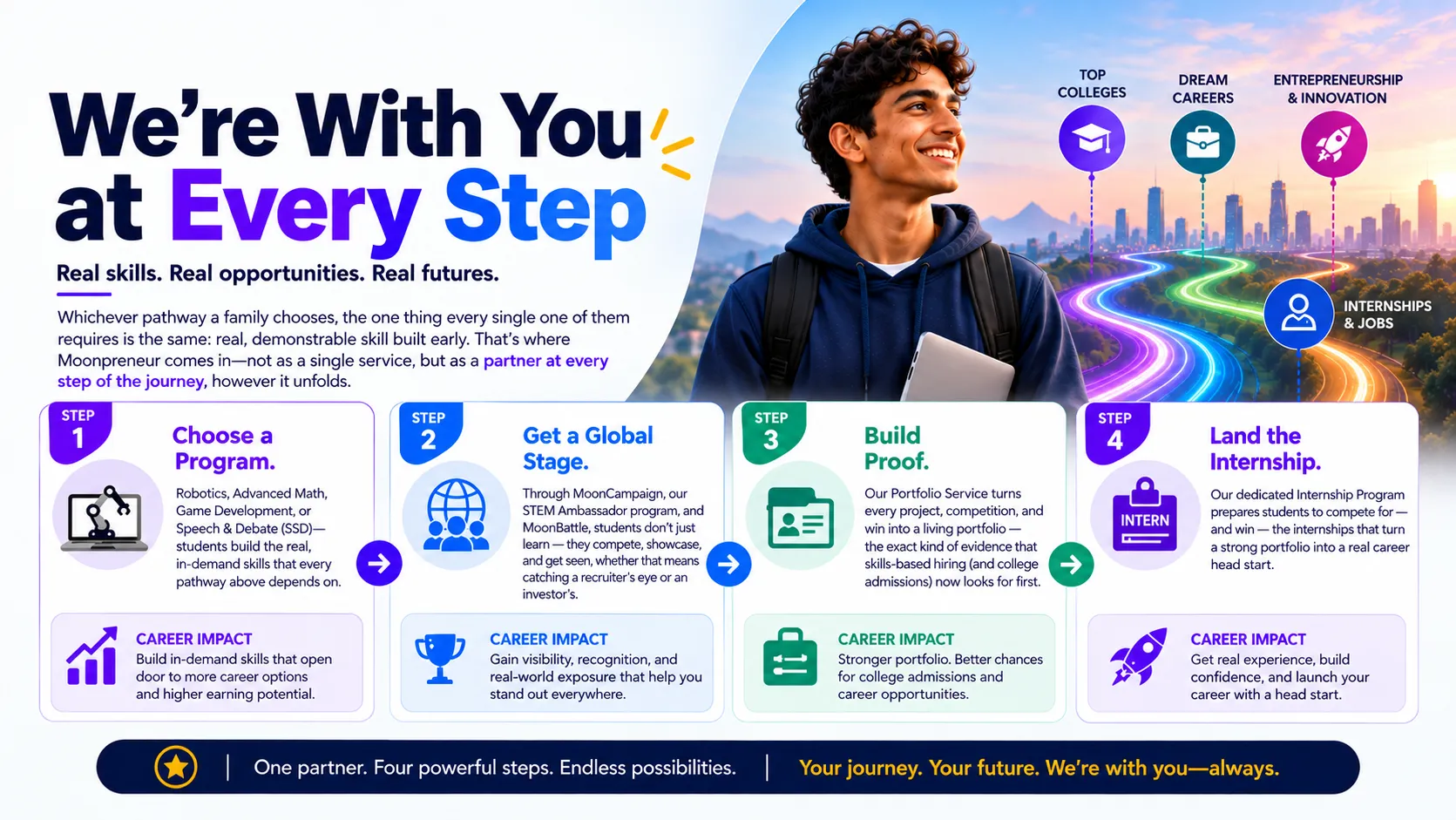
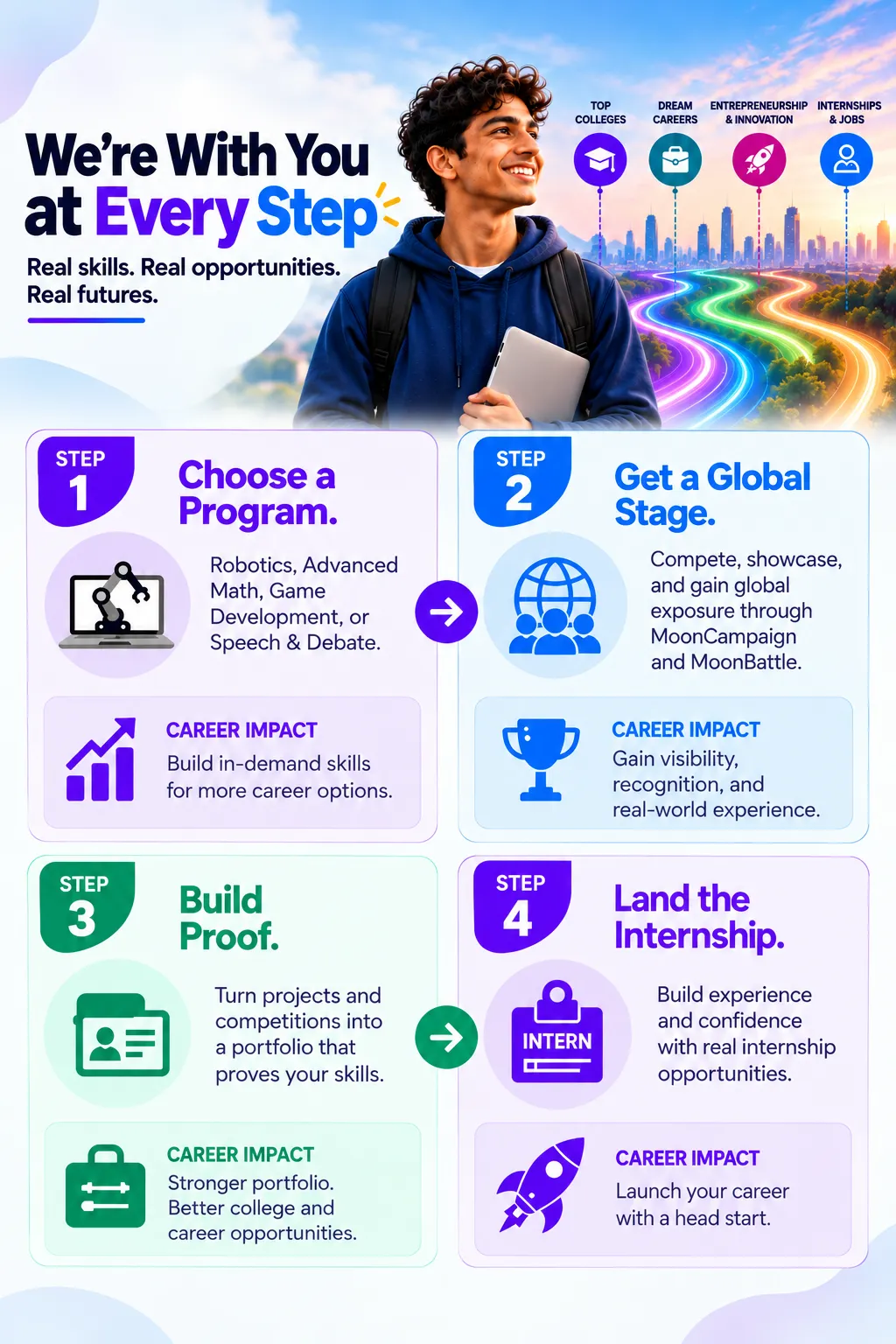
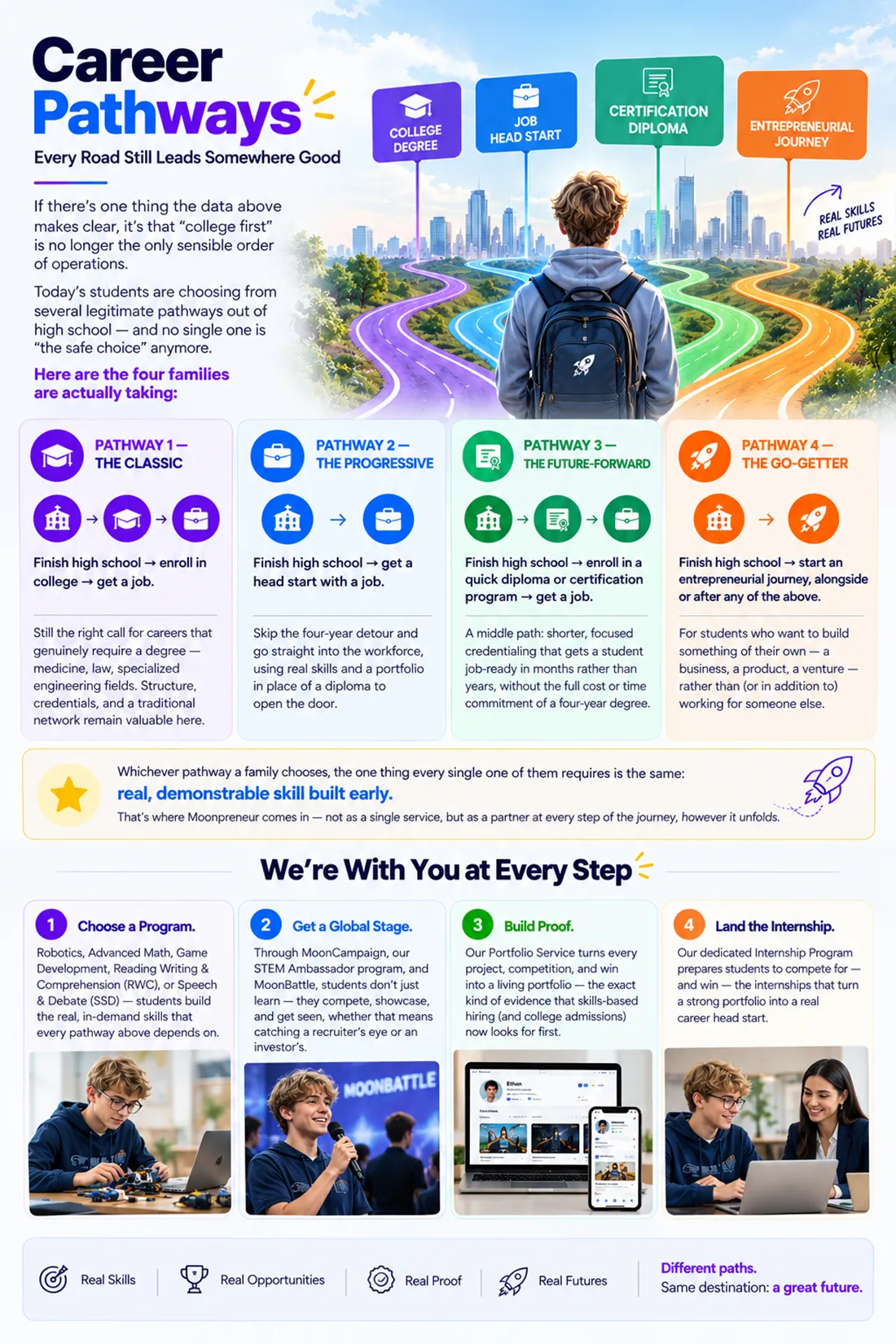
We're With You at Every Step

Real Skills. Real Opportunities. Real Futures.

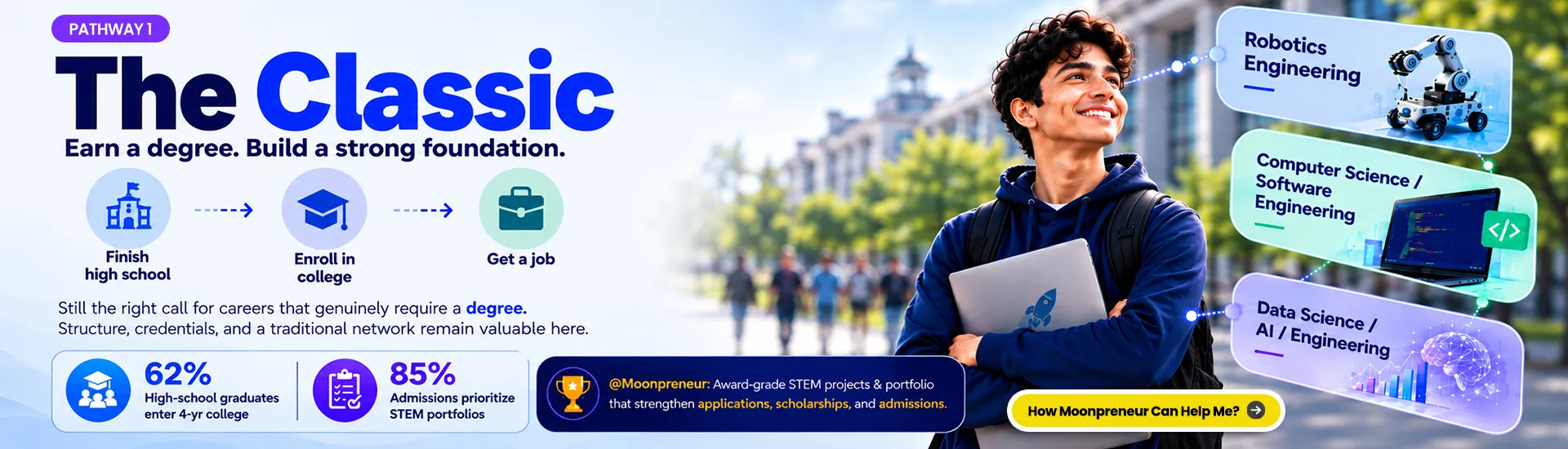
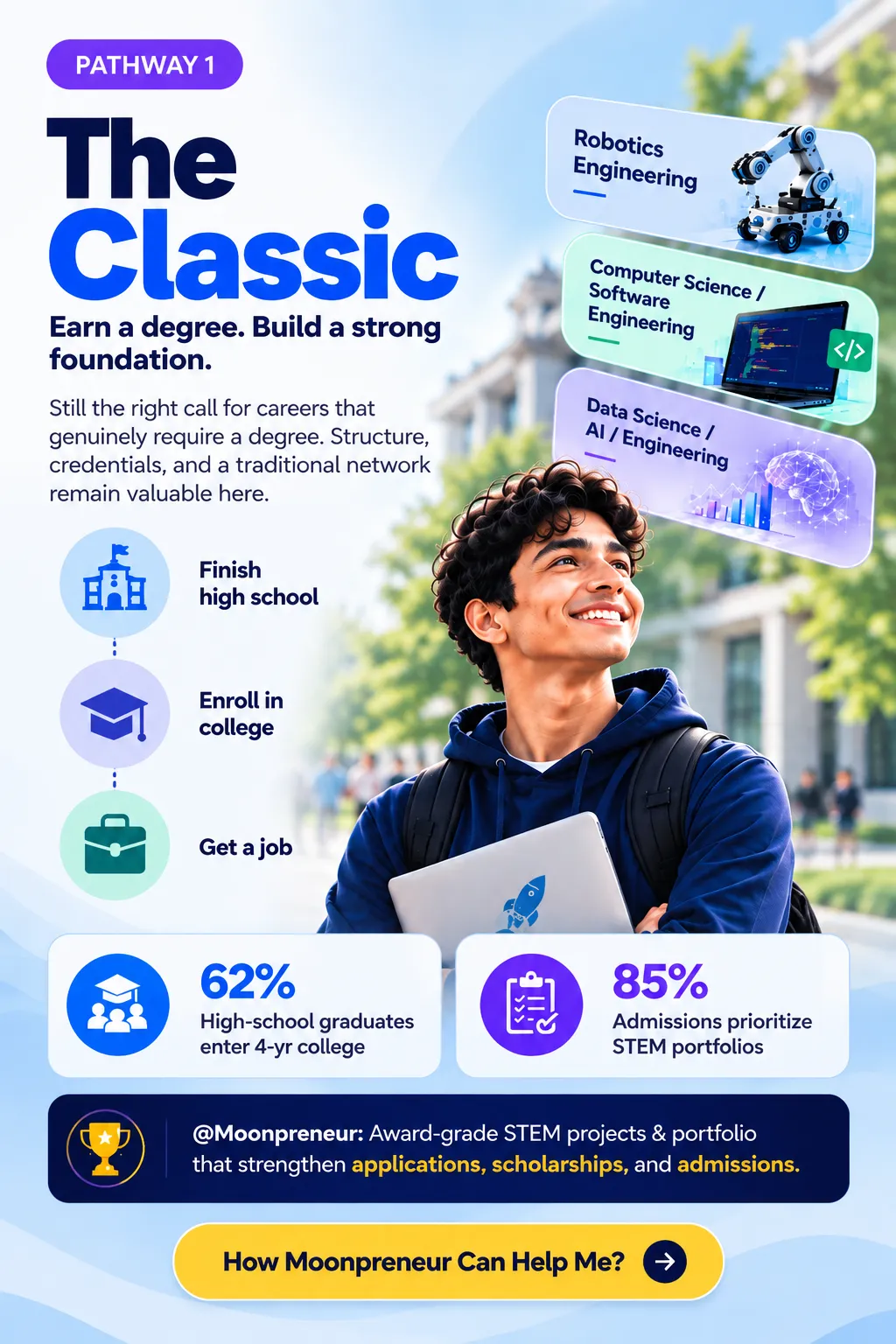
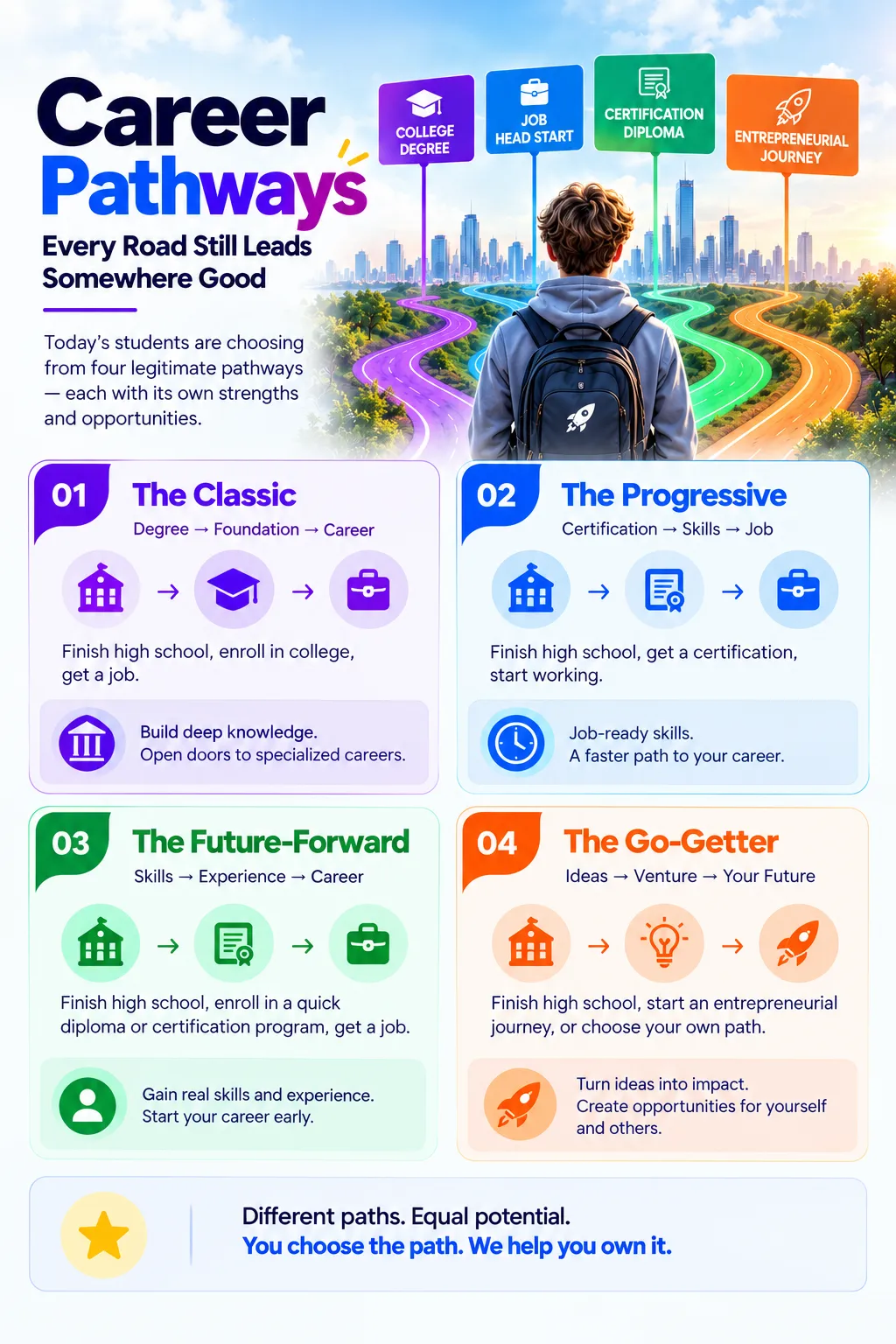
Pathway 1 - The Classic: Earn a degree. Build a strong foundation.
Pathway 1

The Classic

Earn a degree. Build a strong foundation.

For students who want the traditional route, college remains a powerful launchpad—offering deep knowledge, recognized credentials, and access to specialized opportunities. 62% High-school graduates enter 4-year college.

The Pathway

Finish high school
Enroll in college
Get a job

Build today for tomorrow.

Pathway Overview

Core Idea
Earn a degree. Build a strong foundation.
Typical Time to Career
Longer-term; degree typically comes first
Role of Portfolio
Helpful for demonstrating practical ability
Primary Career Advantage
Provides credentials, structure, specialization, and traditional networks
Best Suited For
Careers where a degree genuinely matters
What Employers See
Degree + skills + experience
Key Strength
Depth + credentials
What Students Need to Build
Foundational knowledge + technical skills
Relevant Moonpreneur Programs
Robotics; Advanced Math; Game Development; Speech & Debate (SSD)
Key Message
College is still valuable when the career requires it.

How Moonpreneur Prepares You

Build Future-Ready Skills

Develop technical, analytical, communication, and problem-solving skills alongside academic education.

Create Real Projects

Apply what you learn through hands-on projects that demonstrate practical ability.

Build Your Portfolio

Turn projects and achievements into tangible evidence that can strengthen future college and career opportunities.

Prepare for What's Next

Enter college with stronger skills, greater confidence, and a foundation for future career success.

Gain hands-on skills, build real projects, and develop future-ready competencies to excel in college and beyond.

The Moonpreneur Pathway

From First Skill to First Opportunity

Step 1

Choose a Program

Build In-Demand Skills

Robotics, Advanced Math, Game Development, or Speech & Debate help students develop the technical, analytical, communication, and problem-solving skills employers and colleges value.

Career Impact

Builds a strong skill foundation and opens more career possibilities.

Step 2

Get a Global Stage

Gain Visibility & Experience

Through MoonCampaign, STEM Ambassador, and MoonBattle, students compete, showcase their work, and gain exposure beyond the classroom.

Career Impact

Builds confidence, recognition, communication skills, and a track record that helps students stand out.

Step 3

Build Proof

Turn Skills Into Evidence

Moonpreneur's Portfolio Service, Podcasts, Panel Discussions, and achievements into a living portfolio that demonstrates what a student can actually do.

Career Impact

Strengthens college applications and gives future employers tangible proof of skills.

Step 4

Land the Internship

Get Real-World Experience

Our College Counselor & Internship Programs prepares students to compete for internships that turn their skills and portfolio into meaningful workplace experience.

Career Impact

Builds professional confidence, experience, and a head start toward a future career.

We're With You at Every Step - Moonpreneur four step journey infographic

The Hard Data

Tech Hiring Trends: This Isn't Speculation. It's Already Happening.

46% → 41%

The "degree reset"

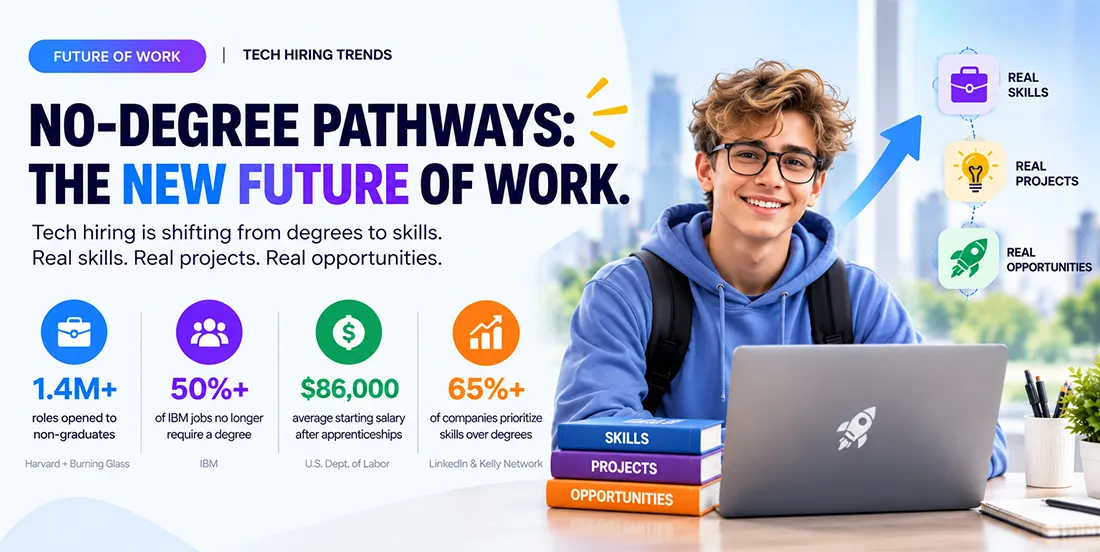
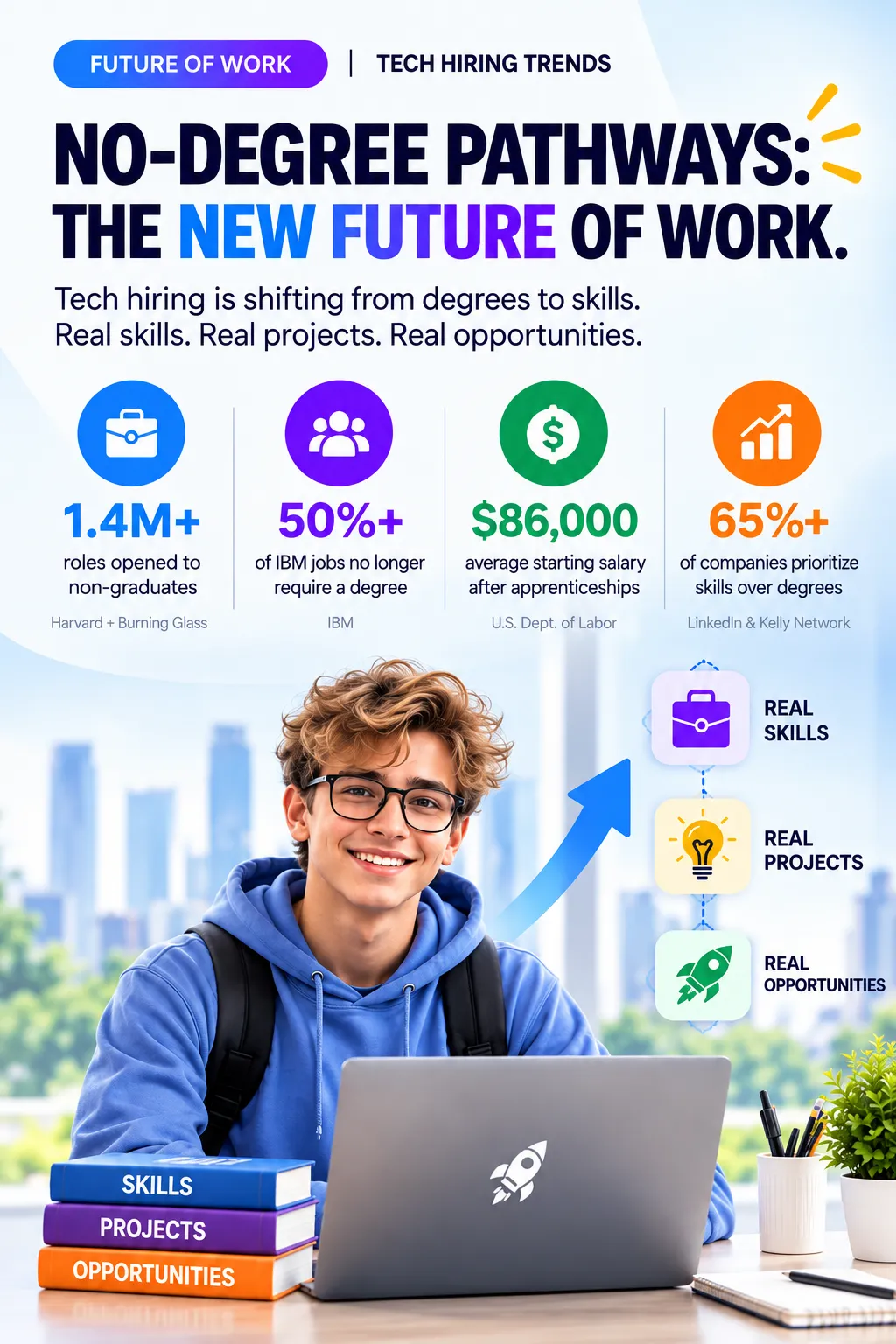
Degree requirements in job postings dropped from 46% in 2019 to 41% today — opening 1.4 million roles to non-graduates.

Harvard Business School & Burning Glass Institute

50%+

Corporate tech precedents

IBM eliminated degree requirements for over half its U.S. jobs; roughly 29% of its workforce lacks a traditional college degree.

IBM, Google, Accenture, Apple

$86,000

The rise of "earn & learn"

Apprentices earn $15–$25/hour while learning, transitioning into tech roles with average starting salaries of $86,000.

U.S. Department of Labor, Multiverse, Per Scholas

65%+

Skills-based recruiting

Global executives report their organizations are actively prioritizing skills-based assessments over degrees.

LinkedIn & Kelly Re:work Reports

If Skills Are the New Currency…

Your Child Needs Proof of Skill, Not Just a Transcript

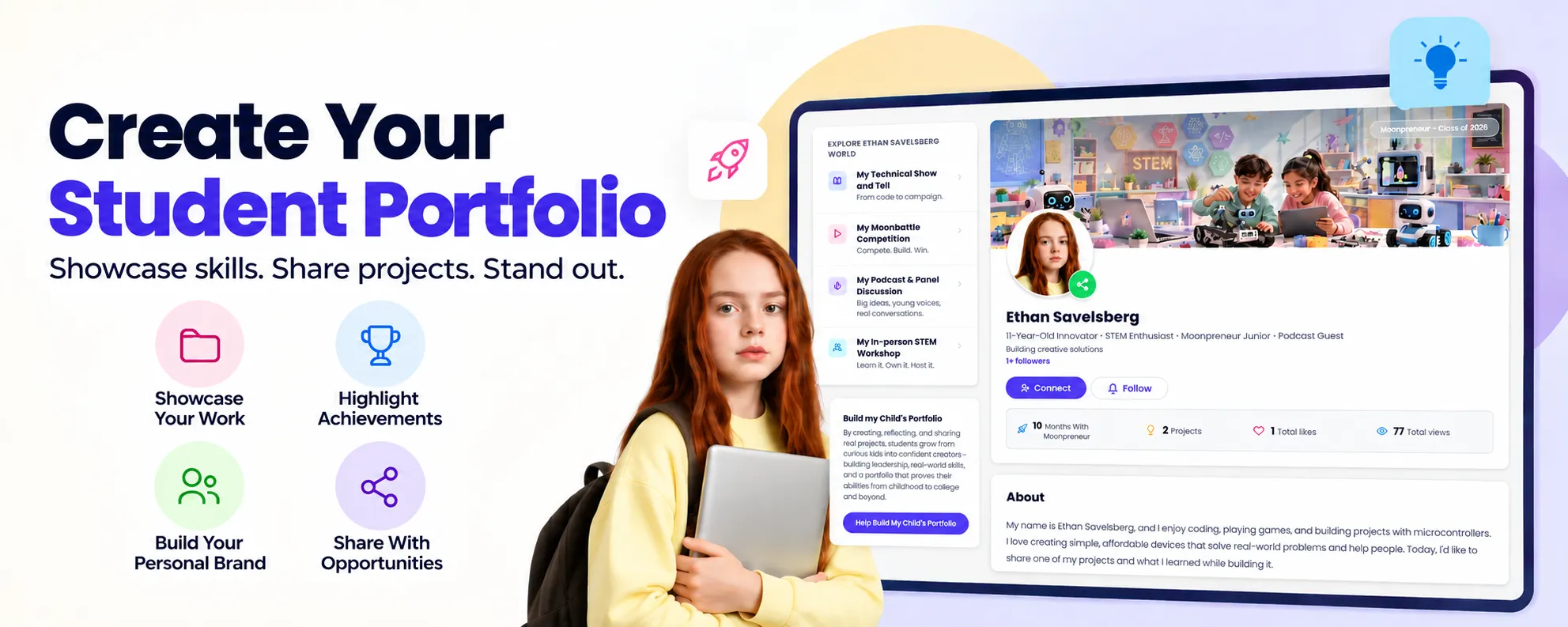
A digital portfolio turns every project your child builds — a robotics build, a coded app, a debate win — into evidence recruiters and colleges can actually see. It's the single asset that matters most in a skills-based hiring world, and it grows with your child from age 7 through their first job.

73% of graduates with a paid internship landed a first job requiring their degree — versus just 44% without one. A strong portfolio is what gets that internship in the first place.

Build My Child's Portfolio Create Your Student Portfolio: showcase skills, share projects, stand out

What it means for your family

Why this shift is good news for families.

The Zero-Debt Advantage

The average college graduate carries over $30,000 in student loan debt. Registered tech apprenticeships flip that script—paying candidates while they learn. That means a young adult can start building wealth at 18 instead of starting their career in a financial hole at 22.

It's "Earn-and-Learn," Not "No Education"

Skipping the traditional four-year route doesn't mean stopping education. Many modern apprenticeships partner directly with universities, and companies often fully fund industry credentials or part-time college coursework while a student works.

Merit Over Pedigree

Modern technical hiring is increasingly relies on portfolio reviews, coding challenges, and structured skill tests — not resume-parsing software. That levels the playing field: hard-working, passionate students can succeed regardless of their background or where they went to school.

A four-year degree still holds real value for long-term career flexibility and specialized fields. But its role as a mandatory checkbox for technical careers is steadily declining. The future belongs to students who build real skills early and can prove it.

What It Means for Your Family

Why this shift is good news for families.

The zero-debt advantage

The average college graduate carries over $30,000 in student loan debt. Registered tech apprenticeships flip that script — paying candidates while they learn, so a young adult can start building wealth at 18 instead of starting in a financial hole at 22.

Earn-and-learn, not no education

Skipping the traditional four-year route doesn't mean stopping education. Many modern apprenticeships partner directly with universities, and companies often fund industry credentials or part-time coursework while a student works.

Merit over pedigree

Modern technical hiring increasingly relies on portfolio reviews, coding challenges, and structured skill tests — not resume-parsing software. Hard-working, passionate students can succeed regardless of where they went to school.

A four-year degree still holds real value for long-term career flexibility and specialized fields. But its role as a mandatory checkbox for technical careers is steadily declining. The future belongs to students who build real skills early — and can prove it.

For Employers

Skills-Based Hiring Works Both Ways

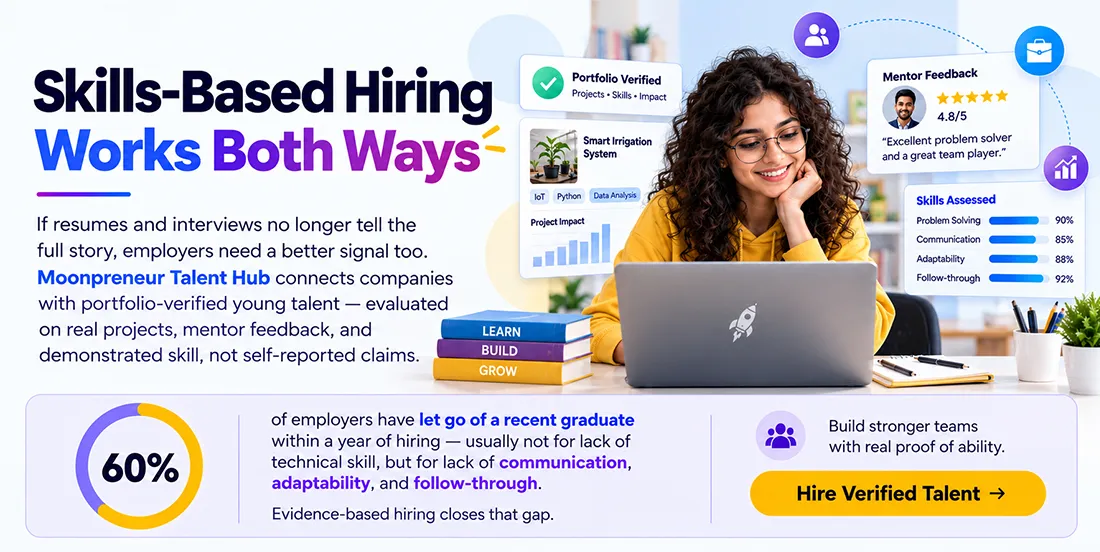
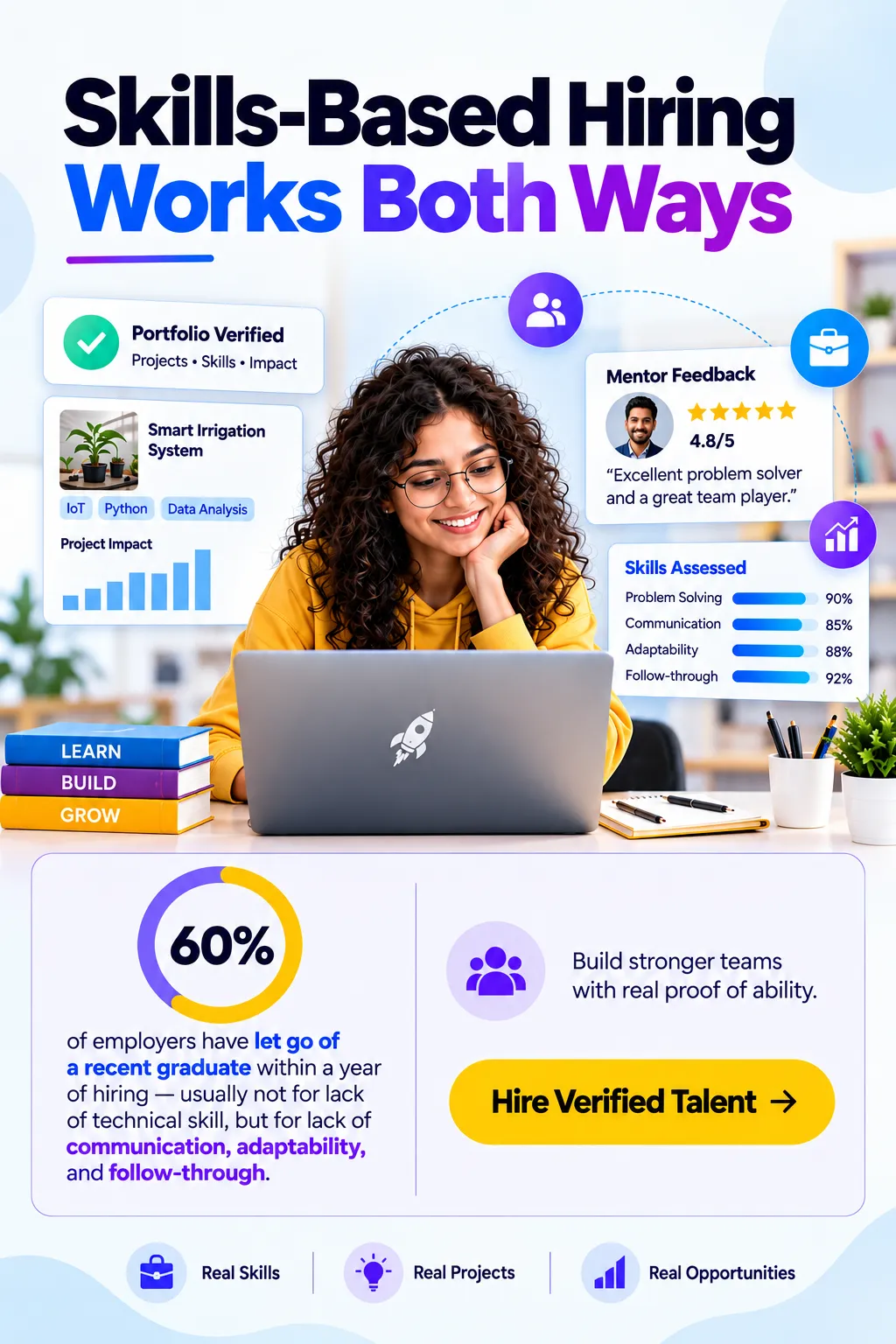
If resumes and interviews no longer tell the full story, employers need a better signal too. Moonpreneur Talent Hub connects companies with portfolio-verified young talent — evaluated on real projects, mentor feedback, and demonstrated skill, not self-reported claims.

60% of employers have let go of a recent graduate within a year of hiring — usually not for lack of technical skill, but for lack of communication, adaptability, and follow-through. Evidence-based hiring closes that gap.

Hire Verified Talent Skills-Based Hiring Works Both Ways: Moonpreneur Talent Hub connects companies with portfolio-verified young talent

The Pathways Are Changing. Get Your Child Ahead of the Shift.

Whether it's building a portfolio of real projects, developing in-demand skills early, or gaining hands-on experience through an internship — every step your child takes now compounds into proof later.

Robotics · Advanced Math · Game Development · RWC · SDD

Future of Work: no-degree pathways, real skills, real projects, and real opportunities

Skills Open More Doors

Debt-free pathways

Skip the student-loan burden with earn-and-learn routes that pay while building skills.

High-income careers

Tech and skilled roles offer strong starting salaries without requiring a four-year degree.

A portfolio that gets noticed

Turn projects into proof recruiters and colleges can see, share, and trust.

Mentorship & apprenticeships

Learn directly from industry mentors and real workplace experience from day one.

Global opportunities

Remote-first and borderless hiring means skills can open doors anywhere in the world.

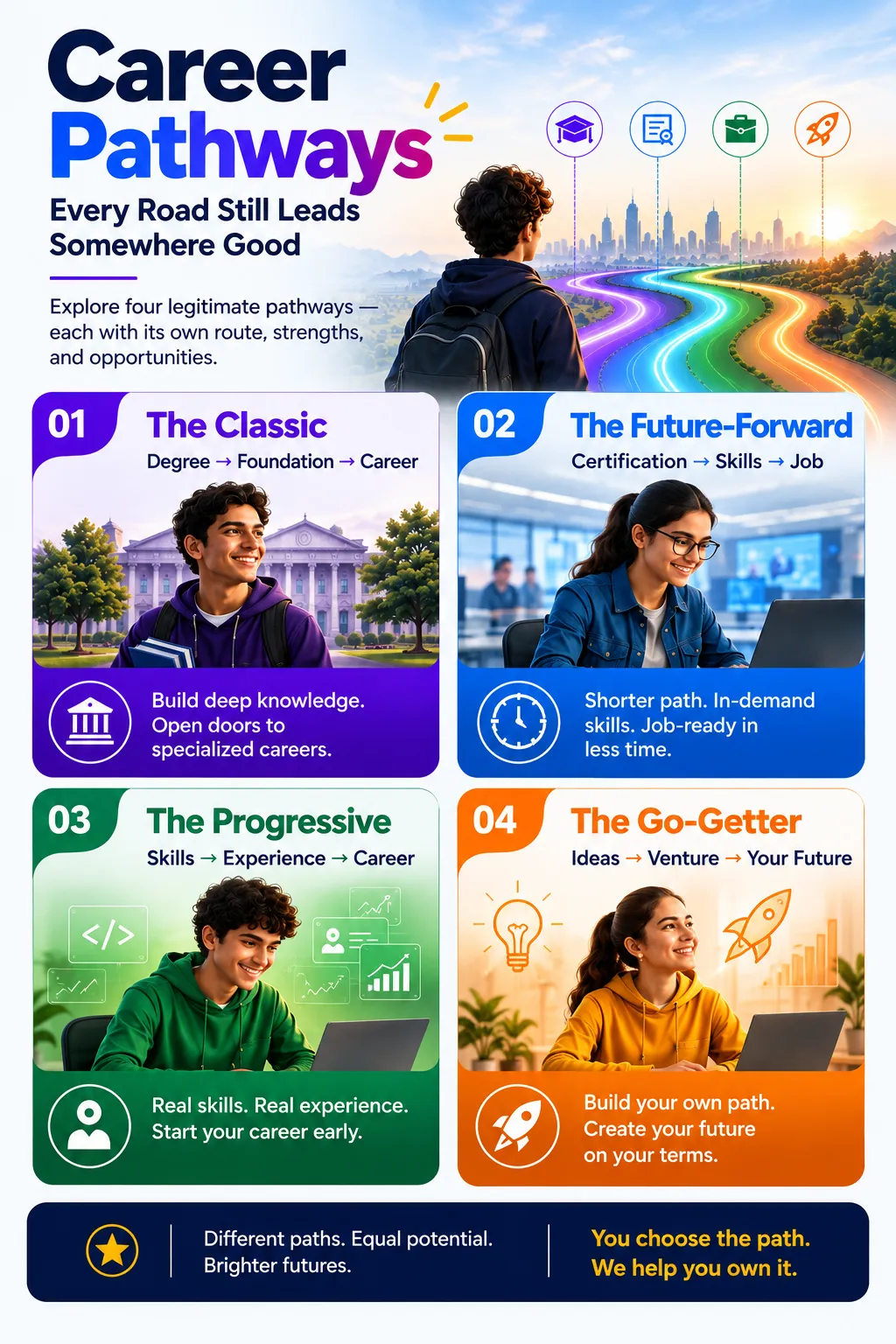
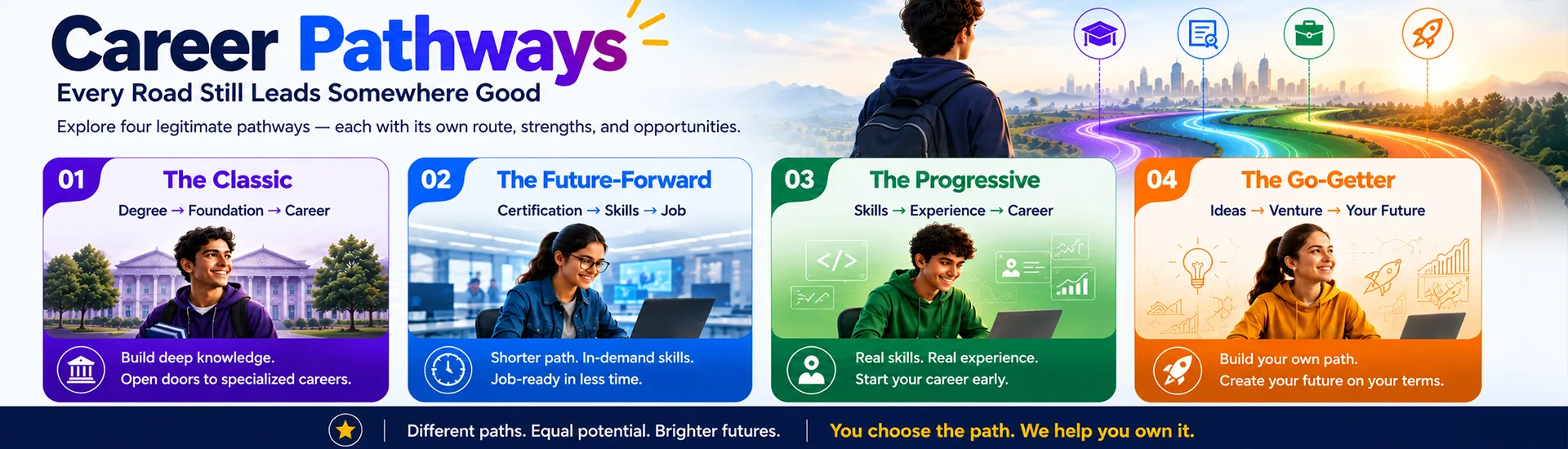
Career Pathways: every road still leads somewhere good