Moonpreneur Icon

RGB LED Color Mixing with A Potentiometer

MoonCampaign by Saatvik (11 years)

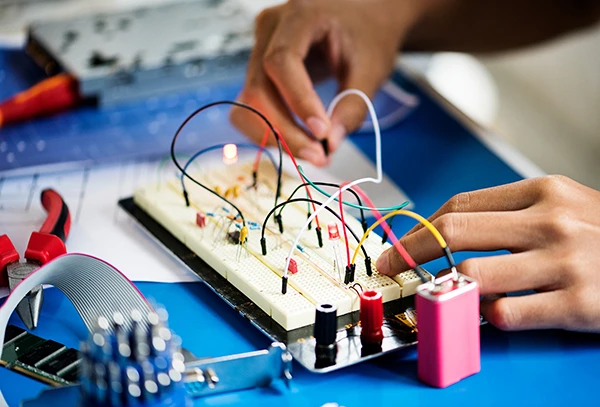
Saatvik is a young innovator with a passion for electronics and color science. In his RGB LED color mixing project, he combined creativity and engineering by using potentiometers to control the brightness of red, green, and blue lights in an RGB LED. With each potentiometer wired to manage one color, Saatvik was able to blend and create countless color shades. He built his circuit using a breadboard, resistors, and a thoughtful design, gaining hands-on experience with voltage control and component connections. Saatvik’s project is a perfect example of how curiosity and learning can lead to bright, colorful results.

  • 👍
  • 🎁 46 days left

Your support will go a long way in encouraging Saatvik and taking their innovation RGB LED Color Mixing with A Potentiometer to new heights.

RGB LED Color Mixing with A Potentiometer

terms and conditions

Our Social Impact - We're transforming education globally with free robotics and math workshops in the US, UK, Canada, and Australia. Our workshops have helped 66,000 students alone in the US plus 14,000 students benefit from our four-week sessions.

Impact of MoonCampaigns

5000+

Innovative MoonCampaigns

20,000+

Minutes of Visual Content

1M+

Unique Video Views

40,000+

Unique Feedbacks

80%

STEM Transformation

95%

Increased Confidence

Learning Journey

  • Moonpreneur STEM Program Student

    Project Name: RGB LED Color Mixing with A Potentiometer

  • Skills

    Arduino programming, sensor integration, conditional logic, product design, and more

  • Category

    Show n Tell

Impact of MoonCampaigns

MoonCampaigns highlight student's creativity, public speaking, presentation skills, and teamwork, with an impressive track record that speaks volumes. MoonCampaigns, through quarterly Show & Tell, highlight thousands of inspiring learning stories from Moonpreneur students worldwide.

5000+

Innovative MoonCampaigns

20,000+

Minutes of Visual Content

1M+

Unique Video Views

40,000+

Unique Feedbacks and appreciation to kids from community

80%

parents observed transformational changes in their ward's STEM knowledge and leadership skills

95%

Parents Reported Increased Confidence in their child

Want your child to be part of an innovative and creative competition?

STORY

Total Views:

Saatvik a bright and curious learner, loved working with circuits and light. One day, he came across an interesting idea—what if he could create his own colors using just a few components? That spark of curiosity led to his project: RGB LED Color Mixing using Potentiometers.


An RGB LED is a special kind of LED that combines red, green, and blue light. By adjusting the brightness of each color, you can make thousands of different shades. Saatvik decided to control each color with a potentiometer, a device that changes resistance and controls voltage in a circuit.


He gathered his materials: a breadboard, an RGB LED, three potentiometers, three resistors, and connecting wires. Carefully, he connected the RGB LED to the breadboard. Then, he added resistors to limit the voltage and wired each color channel—red, green, and blue—to its own potentiometer.


Next, he connected the terminals of the potentiometers to the positive and negative power rails on the breadboard. Once everything was in place, he powered the circuit.


As he turned each potentiometer, something amazing happened: the colors changed! Turning the red knob gave him many shades of red. The green one brought out bright greens and soft teals. The blue dial created cool blues and purples. By combining them, he made magenta, cyan, yellow, white, and countless other shades.


“This project was fun,” Saatvik smiled, “because I could see how voltage and resistance control brightness, and how color mixing works.”


Through his experiment, Saatvik didn’t just light up an LED—he lit up his imagination and learned how science, circuits, and creativity come together in amazing ways.


Every child is gifted. Discover how yours can innovate and lead

Feedback

See what people around the world are saying about Saatvik innovative
RGB LED Color Mixing with A Potentiometer project

The Future Belongs to Critical Thinkers

Hard Truth About Future of Work

WEF's Future of Jobs Report 2025 reveals that 40% of employers expect to reduce their workforce where AI can automate tasks . While AI is projected to create 69 million new jobs globally by 2030, it will simultaneously eliminate 83 million positions, particularly in clerical, administrative, and routine cognitive roles. The message is clear: routine tasks are being automated, but critical thinking and communication skills cannot be replaced.


What AI Can Never Replace:
  • Critical Thinking & Analysis

    Rated by 78% of business executives as the most important skill they seek, yet only 34% of college graduates arrive well-prepared in this area

  • Communication Skills

    Essential for collaboration, innovation, and leadership in STEM fields

  • Problem-Solving

    The ability to break down complex, unprecedented challenges and devise creative solutions

  • Adaptability & Resilience

    Mental agility to assess new situations and pivot strategies in rapidly changing environments

MoonCampaign Prepares the Next Generation

When students (ages 7-16) build projects, they're not just learning to code, they're developing the future-proof skills that AI cannot replicate:

  • Technical Skills:

    Arduino programming, sensor integration, conditional logic, and hardware troubleshooting

  • Critical Thinking:

    Analyzing real-world safety problems, designing solutions, and debugging when things don't work as expected

  • Communication:

    Articulating their process, presenting their work, and explaining complex technical concepts in accessible language

  • Digital Marketing & Entrepreneurship:

    Showcasing their innovations publicly, building their personal brand, and learning to pitch their ideas

  • Problem-Solving:

    Overcoming challenges like mixed-up variables and incorrect responses through systematic troubleshooting

You Might Also Like

Every child is gifted. Discover how yours can innovate and lead