Aarna stood proudly at the front of the room, her Micro:bit device glowing softly in her hand. The audience leaned in as she began to explain her interactive project — a way to express emotions using technology.
With a simple press of a button or a flick of her wrist, the Micro:bit would display different emotional faces on its LED screen. Aarna smiled as she demonstrated: a tap for happiness, a button press for sadness, a shake for confusion. The tiny screen lit up with animated expressions — smiling faces, frowns, wide-eyed surprises — each one matching a real-world feeling.
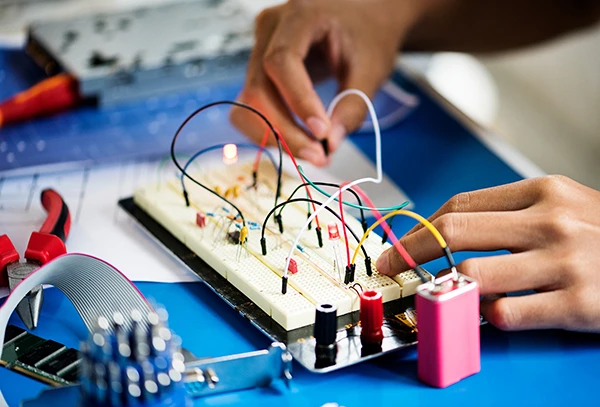
She explained how the Micro:bit’s accelerometer detected gestures, and how buttons A and B triggered specific responses. Each motion or press was tied to a piece of Python code she had carefully written, using conditional statements to ensure the device reacted correctly. With patience and clarity, Aarna broke down the structure of her program, describing how the Micro:bit “understood” which emotion to display based on the input it received.
Beyond the coding and clever design, Aarna’s project carried a deeper meaning. She explained that sometimes people might find it hard to say how they feel — but a device like this could give them an easier, non-verbal way to communicate.
Her presentation wasn’t just technical; it was full of heart. Aarna showed how creativity, coding, and compassion could work together, making technology more human. As she finished her demonstration, the audience erupted in applause, inspired by how a small device and a big idea could bring feelings to light — literally.




 Attend our in-person Robotics & Math